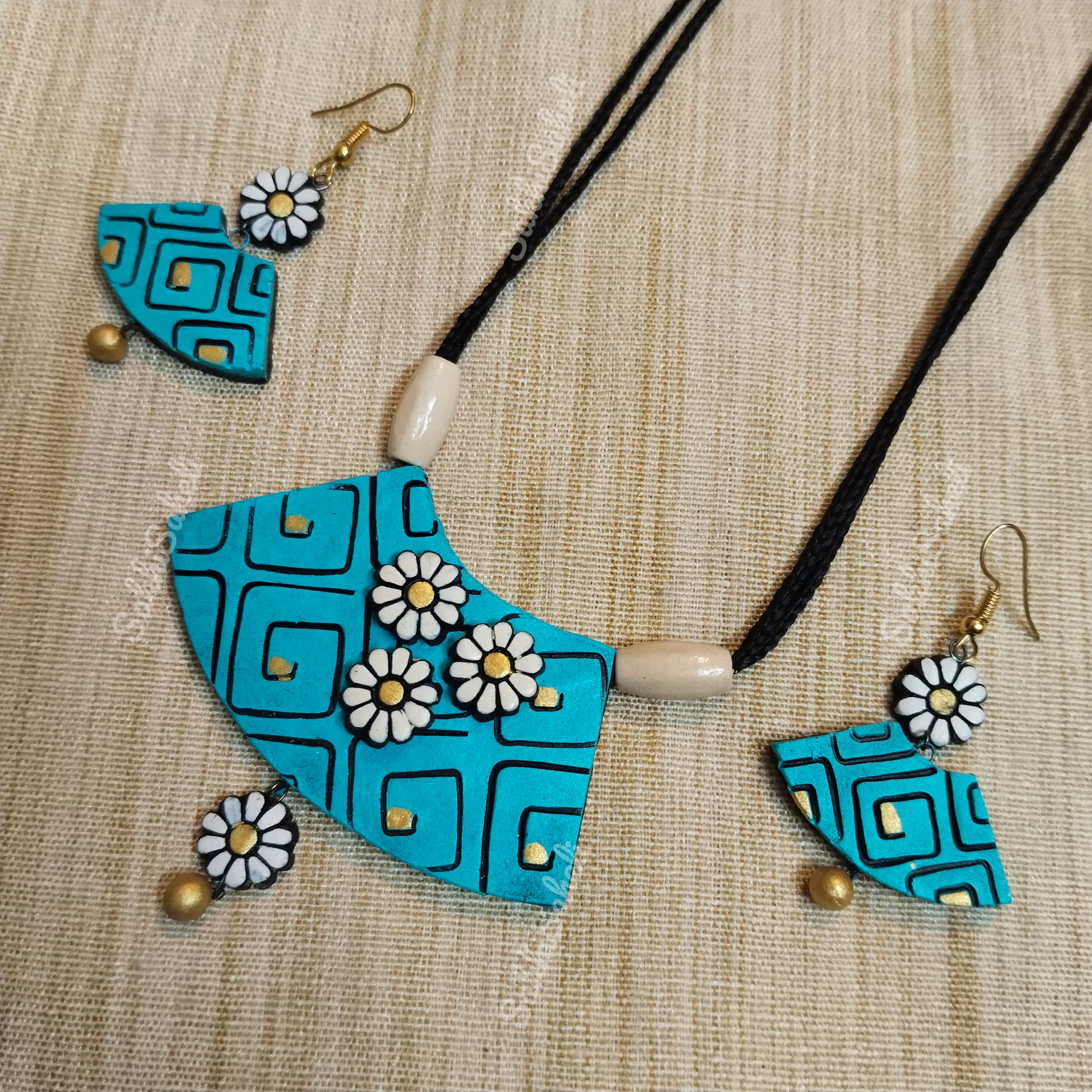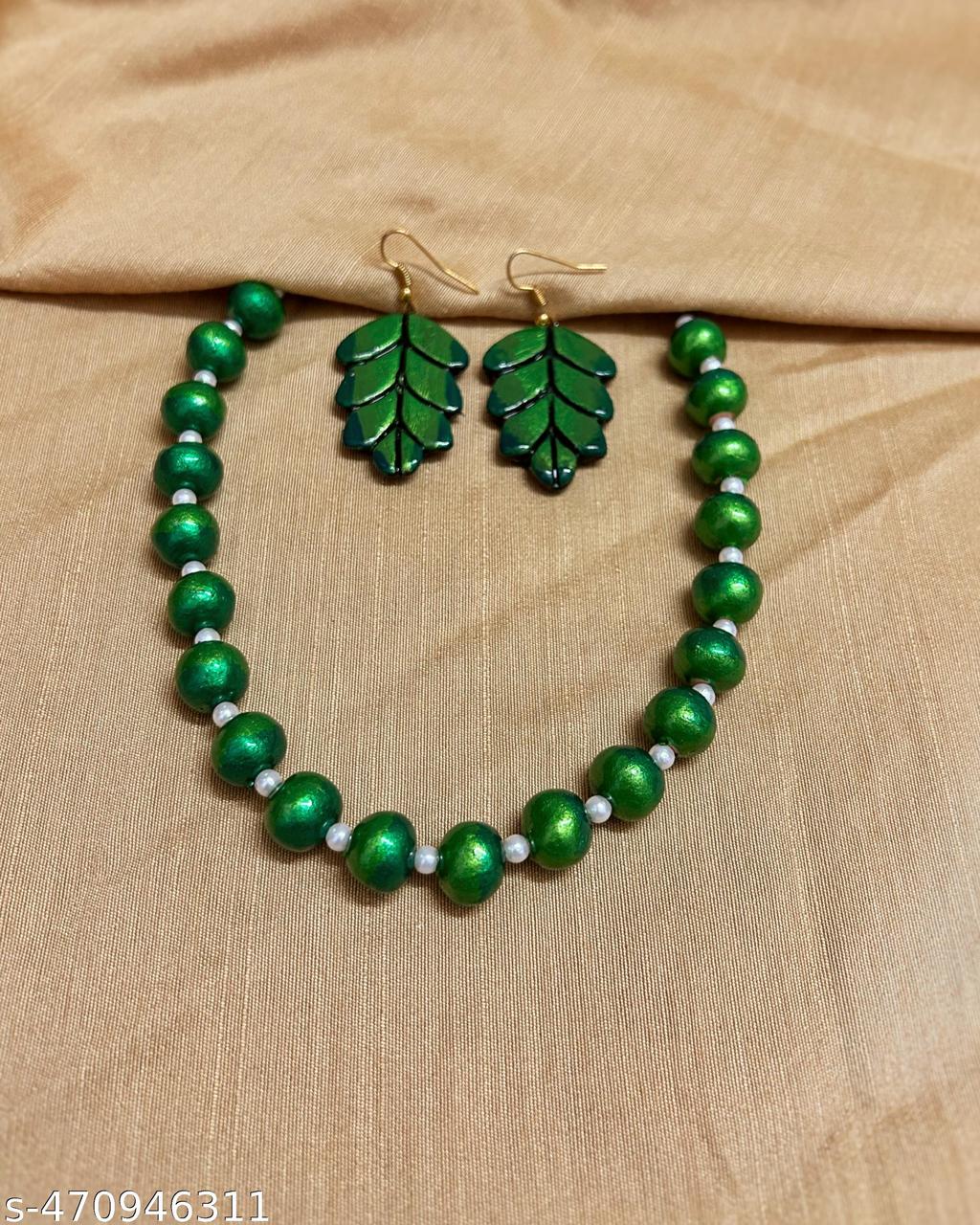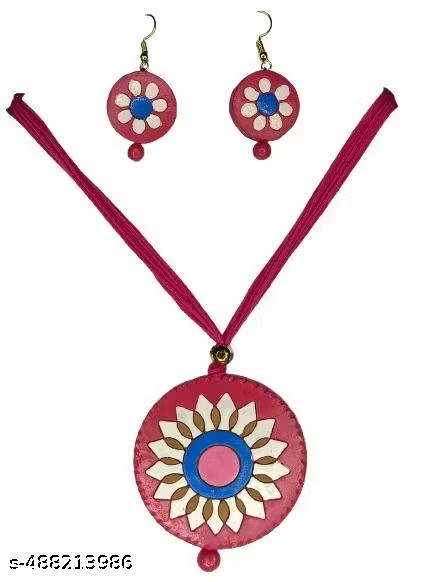
Terracotta jewelry beautifully showcases the blend of earth, artistry, and tradition, resulting in something truly captivating. The term “terracotta” comes from Italian, where “terra” means earth and “cotta” means baked, so it literally translates to “baked earth.” This eco-friendly jewelry is crafted from natural clay, meticulously shaped by hand into intricate designs before being fired and painted. While it has deep roots in India, terracotta jewelry is gaining popularity worldwide, loved for its rustic charm, lightweight nature, and sustainable qualities.
What truly sets terracotta jewelry apart isn’t just how it looks—it’s the fascinating process that brings it to life. Let’s dive deeper into the journey of terracotta jewelry, from raw clay to stunning wearable art.
clay selection and preparation!!
Every piece of terracotta jewelry begins with the clay itself. The quality of the clay is crucial to the final product. Artisans typically choose locally sourced natural clay, known for being soft, easy to mold, and rich in earthy hues.
The first step is to clean the clay, removing any stones, sand, or impurities through sieving and washing. After that, the clay is mixed with water and kneaded until it reaches the perfect consistency—smooth, pliable, and free of air bubbles. This careful preparation ensures that the clay is easy to shape and won’t crack during the process.
Designing and shaping the clay !!
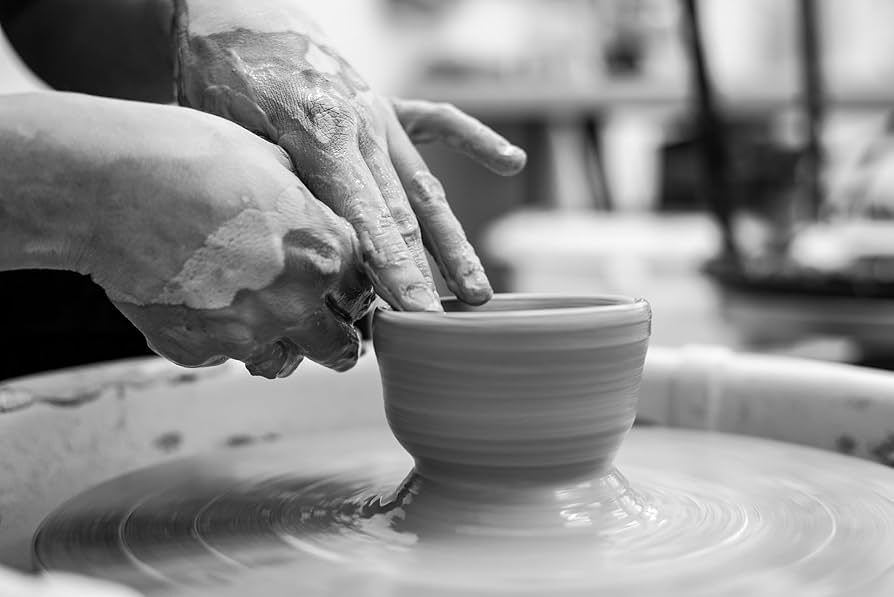
With the clay prepped, the real fun begins. Artisans expertly mold the clay into various jewelry pieces like pendants, jhumkas (earrings), beads, and bangles, using either their hands or small wooden or metal molds.
This is where creativity shines. The designs often draw inspiration from tribal patterns, elements of nature (like leaves, flowers, and animals), traditional symbols, and sometimes even deities. Fine tools or everyday items (like combs or pins) are used to add intricate details and textures to the surface. Many artisans take pride in personalizing each piece, making it a unique work of art.
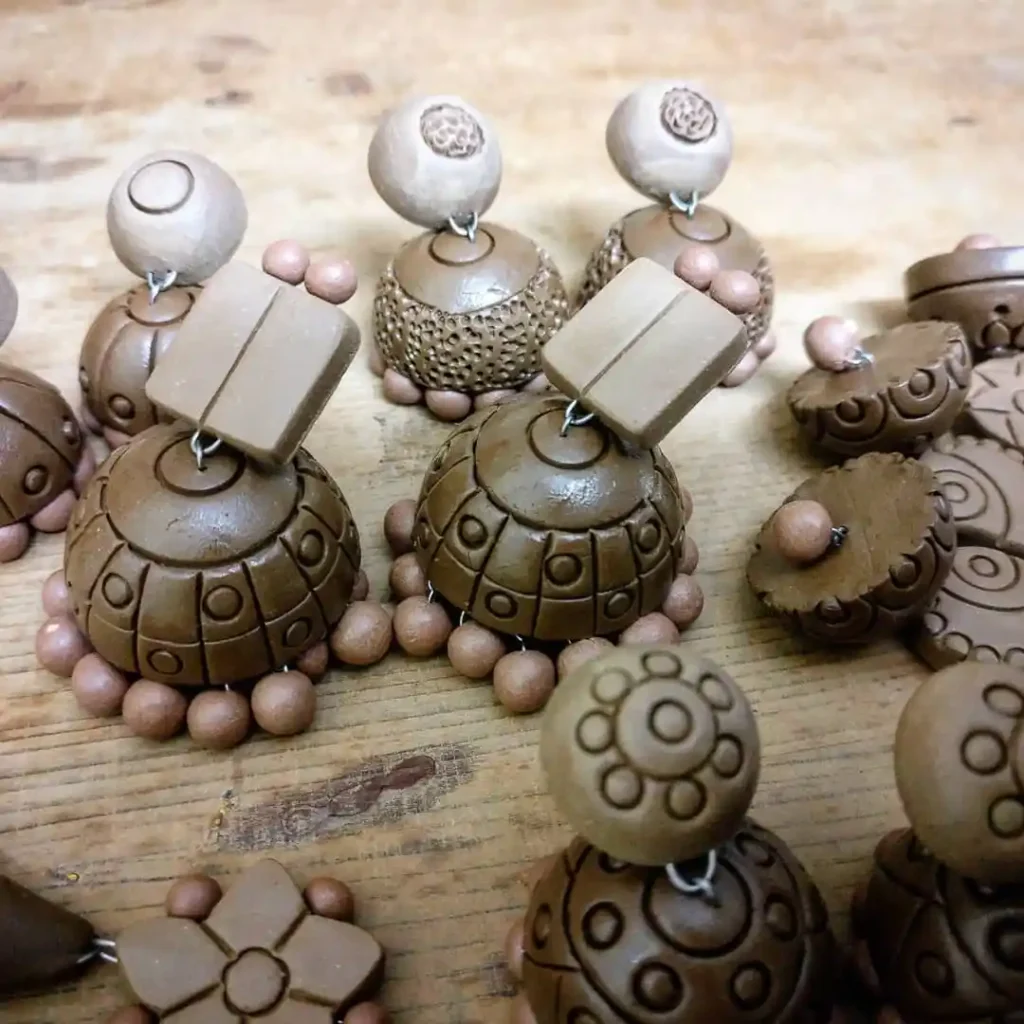
Drying the peices!!
Once the designs are molded, it’s time to let the clay pieces dry completely before they can be fired. This drying process usually happens naturally, often by placing them in the sunlight for several hours or even days, depending on the weather and the size of the pieces.
Getting the drying right is crucial. If any moisture is left in the clay during firing, it can lead to cracks or breakage from steam pressure. Proper drying helps ensure that the jewelry pieces keep their shape and are sturdy enough for the next step.
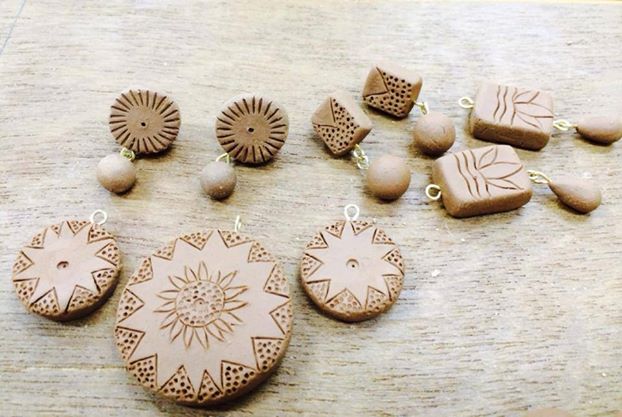
Firing or Baking the clay!!
After the pieces have dried thoroughly, they’re ready for firing—a vital step that turns the soft, delicate clay into a hard, durable material. Firing typically takes place in a kiln, although some artisans might opt for open fire pits if they don’t have access to a kiln.
The kiln can reach temperatures as high as 1000°C. This intense heat hardens the clay and gives it that distinctive reddish-brown hue, making it tough enough for everyday wear. Depending on the firing method used, the final color can range from orange to deep brown or even black.
Painting and Decoration
Once the jewelry pieces have cooled and been cleaned after firing, they’re ready for decoration. Traditionally, terracotta was left in its natural earthy color, but nowadays, many pieces are painted in bright, eye-catching colors to attract a broader audience.
Artisans often use non-toxic acrylic paints or natural dyes to bring color to their creations. Popular choices include gold, black, red, and green. The designs can feature patterns, dots, tribal symbols, or floral motifs. Some pieces are further adorned with beads, stones, mirror work, or sequins to add a touch of flair.
This stage is where the jewelry truly comes to life, showcasing the artisan’s unique style and personality.

Assembling the jewelry!!
The last step in the process is putting together all the beautifully painted and decorated pieces into wearable art. Beads are carefully strung to create necklaces or bracelets, pendants are attached to cords, and earrings are fitted with hooks for that perfect finish.
To keep things eco-friendly, materials like cotton threads, silk cords, jute, or leather strings are often chosen over metal chains, preserving the natural charm of the jewelry. The end result is a stunning terracotta jewelry set that’s not just ready to wear but also ready to impress.
Conclusion:A crafted rooted in earth and art!
Creating terracotta jewelry is a lovely mix of tradition, patience, and skill. From a simple lump of clay to a beautifully hand-painted accessory, each piece reflects the artist’s touch and the essence of nature.
Wearing terracotta jewelry goes beyond just looking good—it’s about honoring sustainable artistry and supporting handmade craftsmanship. Whether you opt for a striking statement necklace or a pair of graceful jhumkas, terracotta jewelry brings a unique allure that connects you to India’s rich artisanal legacy and the timeless beauty of the earth itself.